
Not every flooring job starts with a blank slab. This Caulfield North project began with slate tiles laid across multiple uneven surfaces, and a homeowner who wanted a complete change in look rather than a like-for-like replacement. Jobs like this are less about picking a product off a sample board and more about solving what is underneath it first.
The Brief: A Complete Style Change with a Complex Subfloor
The owner wanted to move away from the existing look entirely, toward a waterproof floor in a mid to dark palette with some natural colour variation, rather than a flat, uniform finish. The existing slate had dated the space and made it feel heavier and darker than the owner wanted, and there was no interest in simply replacing tile with tile. The brief called for a genuine transformation, not a refresh.
Beyond the colour and material change, the home also needed a flooring solution tough enough to handle the practical demands of daily life while giving the space the more contemporary, cohesive feel the owner was after.
Subfloor Preparation: Removing Slate and Levelling Multiple Surfaces
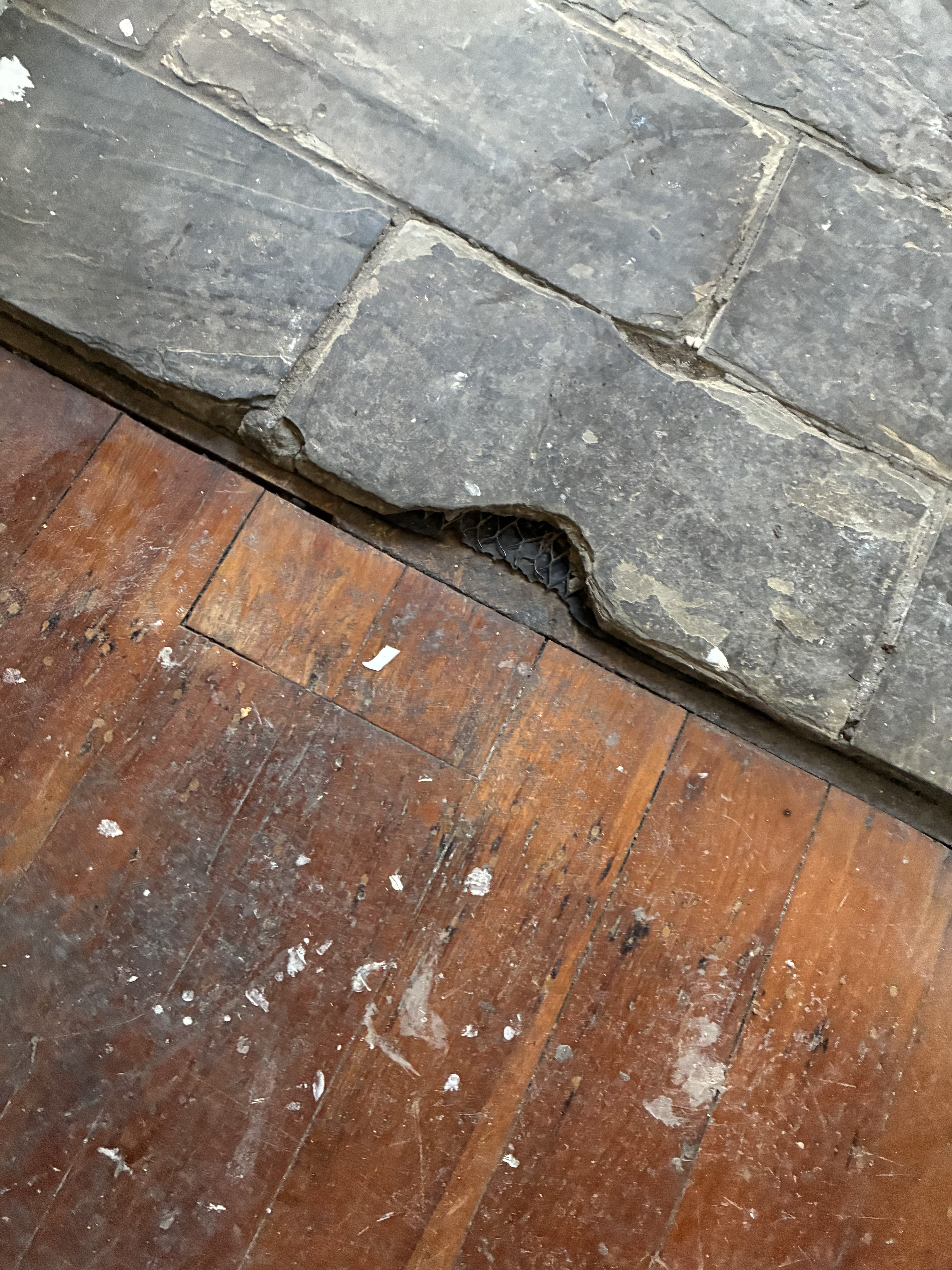 The site came with real challenges before a single board went down. The existing slate tiles had to be removed and disposed of, which on its own is a labour-intensive process, since tile adhesive and old bedding compound often need to come up along with the tiles themselves to leave a workable base.
More significantly, the site had different flooring surfaces sitting at different levels, which meant extensive subfloor levelling was required to bring the whole area to a single consistent height and plane before installation could begin. This step is invisible in the finished photos, but it is the difference between a floor that lasts and one that fails early. An uneven or unlevelled subfloor creates weak points where a new floating floor can flex under weight it was never designed to bear, and that flex is exactly what leads to joint separation, clicking noises, and premature wear along the seams over time.
Levelling this kind of multi-surface subfloor properly means more than a quick skim coat. It requires assessing the height difference across the whole area, applying levelling compound in the right thickness to bring every section to the same plane, and allowing proper curing time before the new floor goes down. Skipping or rushing this stage is the single biggest cause of callbacks on a job like this, so it is where the real value of a professional installation shows, even though nobody sees it in the after photos.
Why We Recommended SPC Hybrid Brown Washed
Once the subfloor was level, we installed SPC Hybrid flooring in Brown Washed, an 8mm board that delivers the waterproof performance the site needed after coming off tile in areas prone to moisture, in a tone with enough natural variation to avoid the flat, uniform look the owner wanted to move away from.
SPC, or stone plastic composite, flooring is built around a rigid waterproof core rather than the timber fibre core used in some hybrid products, which makes it particularly well suited to a home that has previously had tile in wet-prone areas. The Brown Washed colourway gives genuine depth and tonal movement across the boards rather than a repetitive, uniform pattern, which was central to avoiding the flat look the owner specifically wanted to leave behind.
Installation Method: Floating Floor
With the subfloor levelled and prepped, the SPC Hybrid was installed as a floating floor across the full area. A floating installation uses a click-lock system between boards rather than fixing each board to the subfloor individually, which allows the floor to expand and contract naturally with temperature changes while still locking together into a stable, waterproof surface. Over a freshly levelled subfloor, this gives a consistent, secure finish across what was previously a patchwork of different surfaces and levels.
The Result
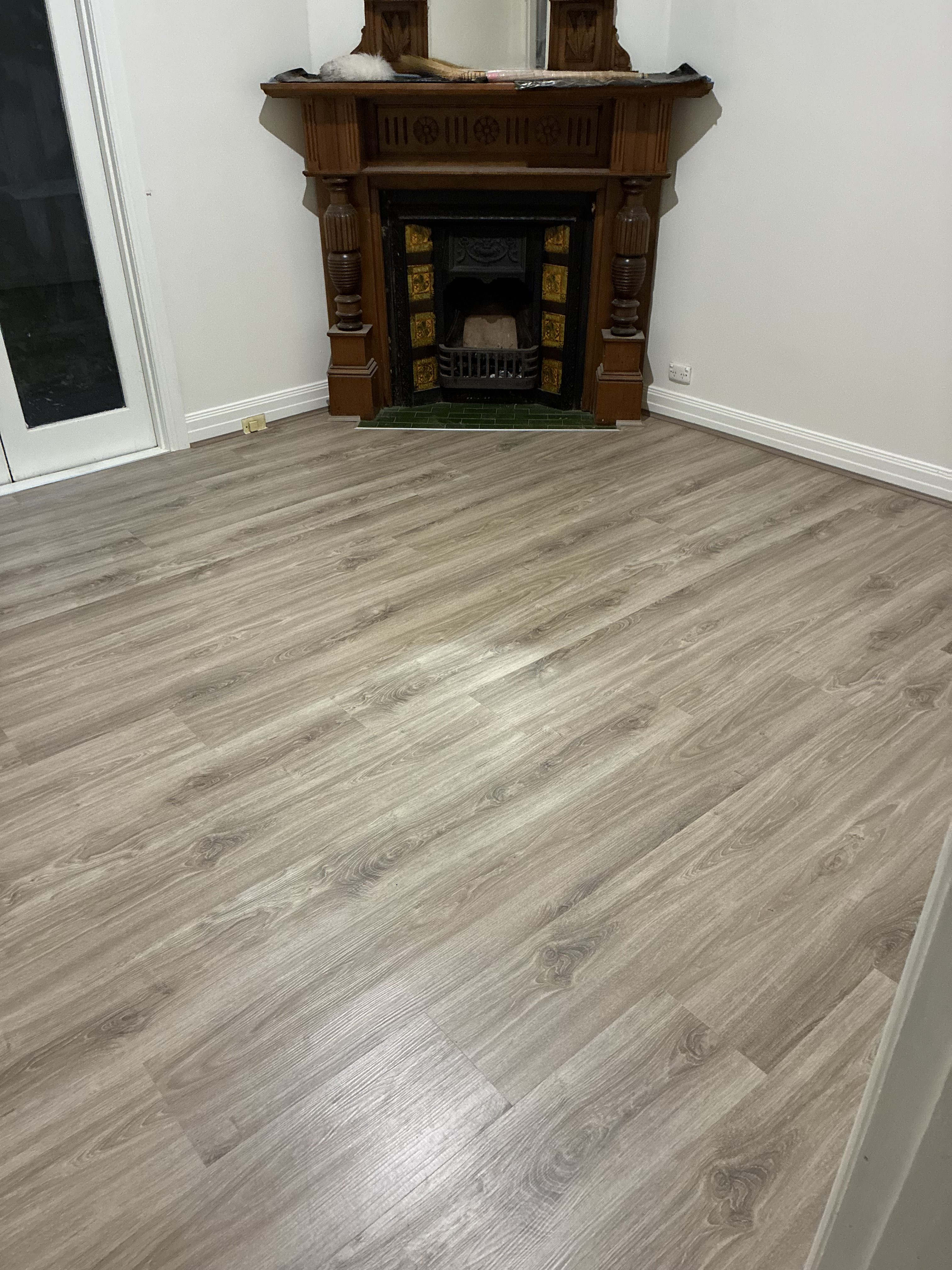 What was a mismatched, dated tiled space is now a single, cohesive floor with genuine depth of colour underfoot. The transformation goes well beyond a simple material swap, the levelling work means the floor performs as well as it looks, with no weak points carried over from the old surface beneath it.
If your property has a tricky subfloor or mixed existing surfaces, get in touch with Quality Flooring for an on-site assessment before you commit to a flooring choice.