
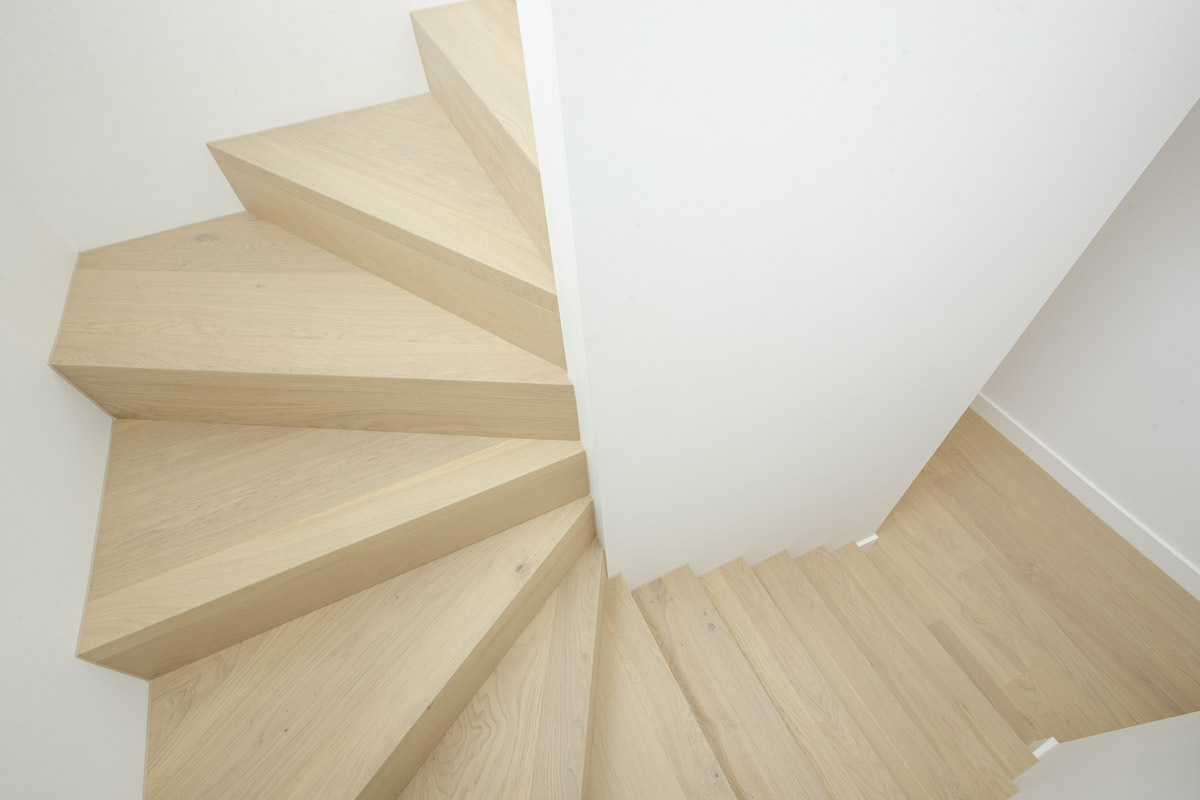
A staircase is one of the hardest working, most visible parts of any home, and it is usually the first thing that shows wear. Standard mitred stair nosing solves the two biggest problems with an ageing staircase at once: it protects the leading edge of every step from chipping and scuffing, and it lets the stairs match the surrounding floorboards perfectly, so the whole space reads as one continuous floor rather than two separate finishes bolted together.
What Is Standard Mitred Stair Nosing?
Stair nosing is the rounded or bevelled edge fitted to the front of each tread, the part your foot actually lands on as you go down. A mitred nosing takes that same edge and joins it around a corner, most often on a quarter turn or winder staircase, so the timber wraps the step cleanly instead of butting into an awkward straight cut. Done well, the join is barely visible. Done poorly, it is the first thing anyone notices.
At Quality Flooring, standard mitred nosing is milled from the same engineered oak flooring as the floorboards it sits alongside, matched for colour, grain and finish. That is what gives the staircase its seamless look rather than the mismatched, slightly-off feel that comes from a generic pre-finished nosing profile bought off the shelf.
Why Choose Mitred Nosing Over a Standard Straight Edge
A straight nosing works fine on a simple, uninterrupted run of stairs. The moment a staircase turns a corner, whether that is a quarter turn, a half turn, or a winder tucked into a tight stairwell, a straight nosing forces an ugly butt join right at the point where the eye is naturally drawn. Mitred nosing is cut specifically to follow that turn, so the grain and the edge profile continue around the corner as one continuous line.
Beyond the visual result, matching the nosing to the floorboards throughout the rest of the home means there is no jarring transition between levels. Walk from a hallway with engineered oak boards onto a staircase finished in the same timber, and the whole space feels considered rather than patched together room by room. You can see this kind of continuous finish across our project gallery.
How We Install Mitred Stair Nosing
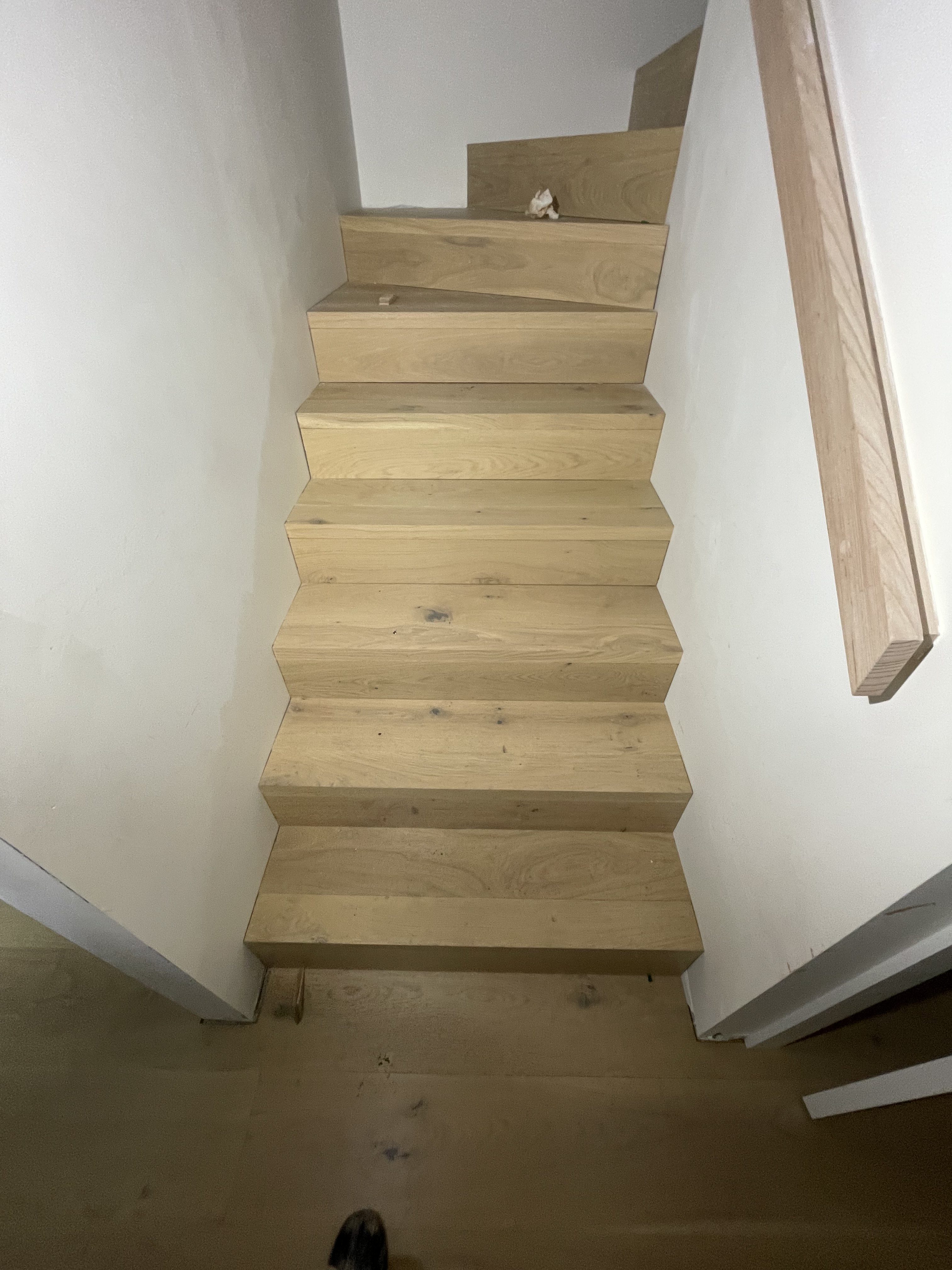
Every staircase is measured on site before any timber is cut, since no two stairwells are ever quite the same width, pitch or turn radius. Each nosing piece is mitred to match the exact angle of that individual step, not a generic angle applied across the whole run. Where the staircase turns, adjoining pieces are cut and test-fitted together so the joint sits tight with no visible gap before anything is fixed down.
Subfloor preparation matters just as much on a staircase as it does on any other floor. Each tread is checked for level and secured before the nosing goes on, so the finished stairs are structurally sound underfoot, not just cosmetically finished. The nosing is then fixed, sanded flush with the tread, and finished to match the sheen and colour of the surrounding floorboards. This is one of the core parts of our full flooring installation service.
Where Mitred Nosing Works Best
Mitred stair nosing is the right call whenever a staircase turns a corner and needs to match existing or new floorboards elsewhere in the home. It suits engineered oak, spotted gum and most other engineered timber species, and works equally well on a full renovation or as a standalone staircase upgrade where the floors elsewhere are staying as they are.
The Result
A well executed mitred nosing disappears into the staircase. Nobody looking at the finished result should be thinking about how the corner was joined, they should just be looking at a staircase that flows naturally from top to bottom and matches the floor it sits alongside. That is the standard every staircase leaves our workshop measured against.
If your staircase needs a nosing profile that actually matches the rest of your floor, get in touch with Quality Flooring for a measure and quote.