
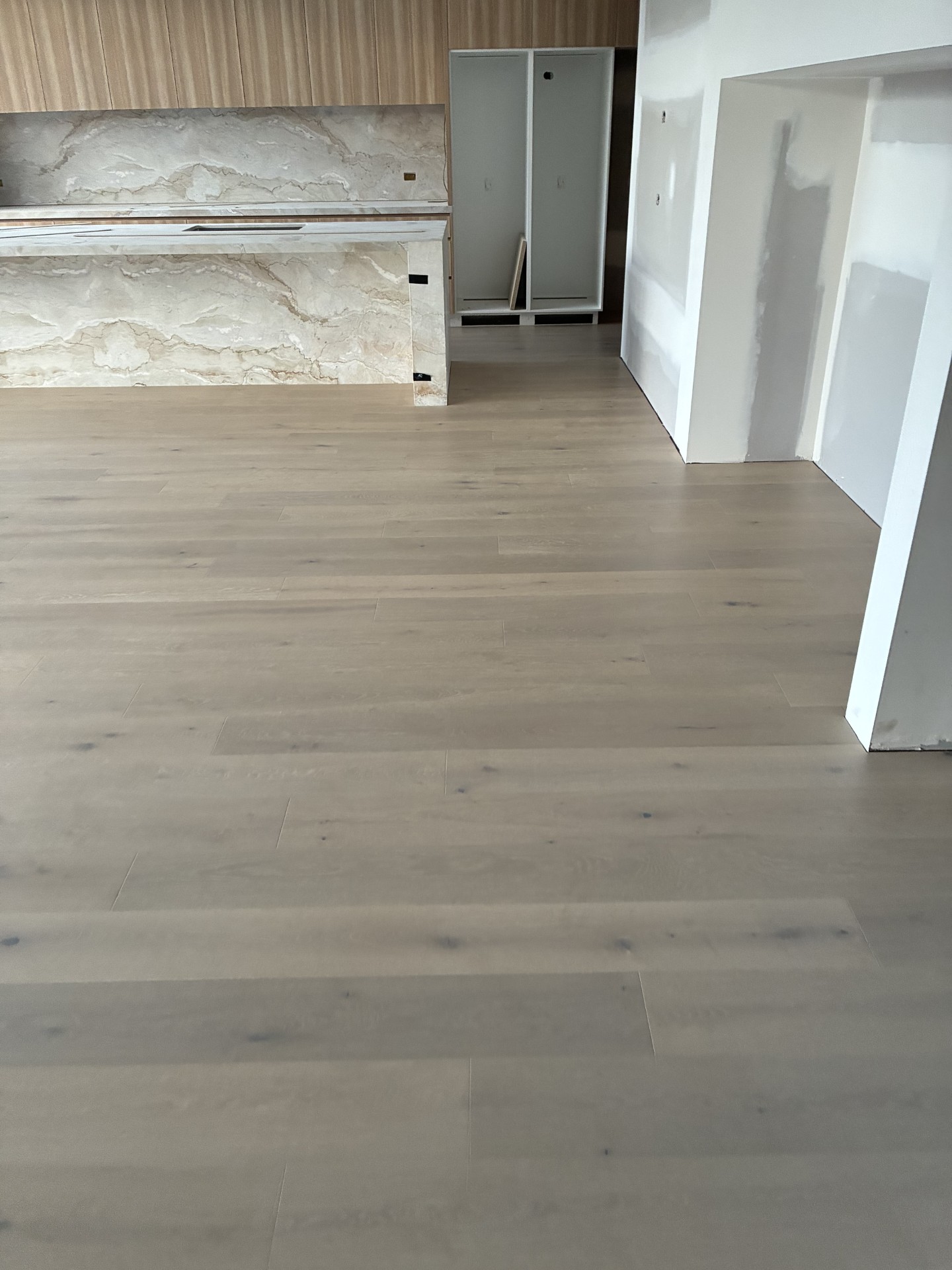
A new build gives a builder the rare chance to choose a floor before the rest of the interior is locked in, which also means the flooring choice carries more weight than usual. Get it right and every other finish in the home, cabinetry, paint, joinery, works with it. Get it wrong and the whole interior fights against the floor underfoot. For this Brighton East project, the brief was simple to state and harder to deliver: a modern floor that felt light and warm at the same time.
The Brief: Lightness and Warmth for a New Build
The builder wanted a flooring option that would suit a contemporary new home without feeling cold or clinical, a balance that is harder to strike than it sounds. Many light-toned engineered boards read as flat or sterile once furniture and lighting are added, particularly under downlights or in a home with a lot of white cabinetry and rendered walls. The brief was to avoid that outcome while still keeping the space feeling bright and current.
There was also a practical dimension. As a new build, the builder needed a flooring choice broad enough to suit a range of eventual buyer tastes, since the home would be marketed rather than lived in by the person choosing the floor. That ruled out anything too dark, too pattern-heavy, or too polarising.
Why We Recommended Engineered Oak Silver Pearl
We recommended Engineered Oak Silver Pearl, a 14/3mm board in a 190mm width that reads as genuinely light without losing warmth. The distinction matters. A lot of pale engineered boards achieve their lightness by leaning grey or heavily bleached, which can drain warmth out of a room entirely. Silver Pearl keeps a soft, warm undertone in the grain even at a light shade, which is what stops it from reading as sterile.
The 190mm board width also plays a part here. Wider boards show more of the timber’s natural grain and colour variation per board, which reads as more premium and less repetitive than a narrower strip floor, particularly across the larger open-plan spaces common in new builds. The subtle pearl tone works with almost any interior palette a future owner might choose, whether that leans warm timber tones, black matte fixtures, or a cooler, more Scandinavian scheme, which matters for a builder selling into a range of buyer tastes rather than a single fixed brief.
As with all our engineered European oak, the board is finished with a wear-resistant coating suited to everyday family use, so the floor holds its finish under normal residential traffic rather than needing early refinishing.
Installation Method: Direct-Stick with Moisture Barrier
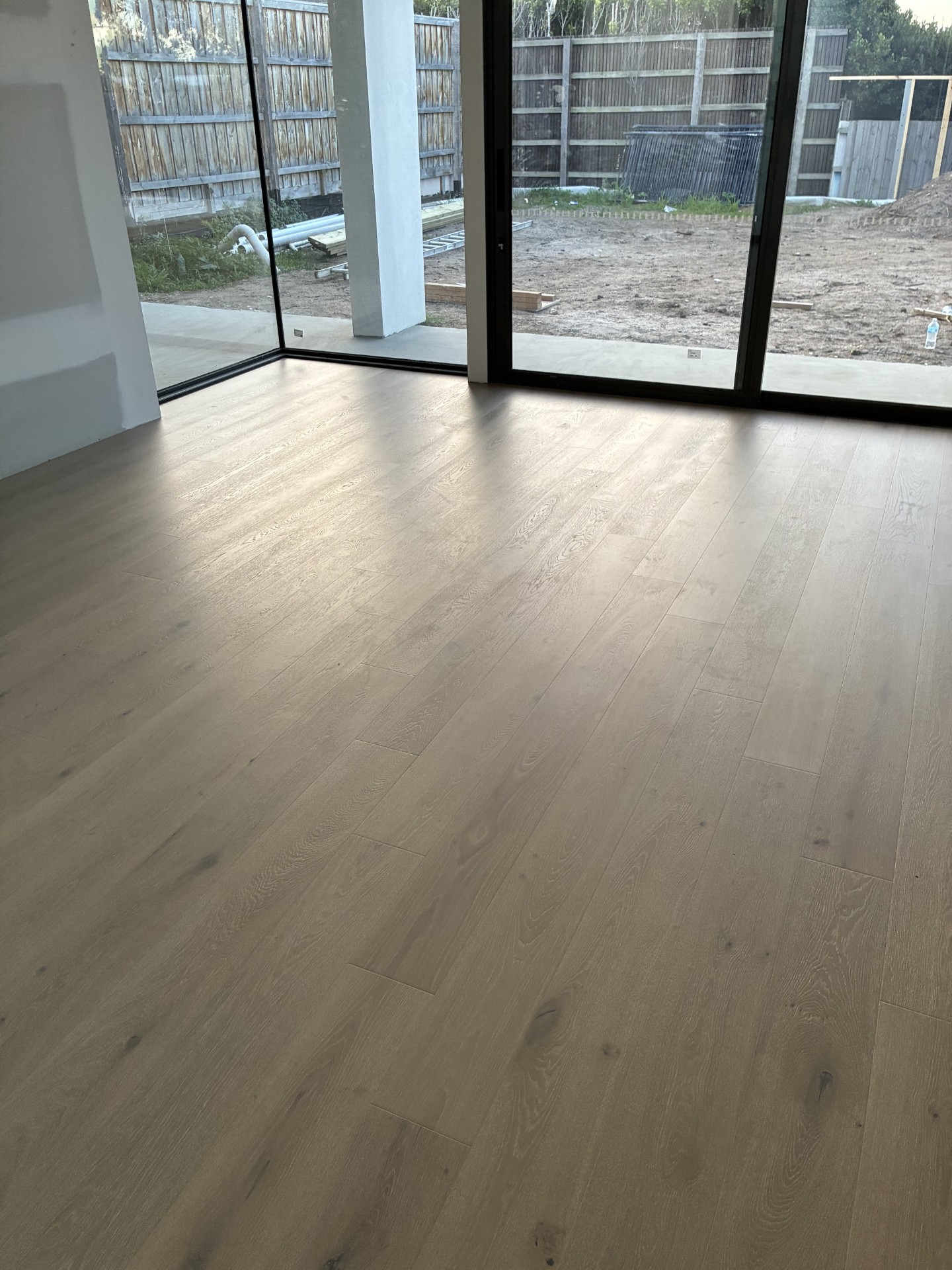 The flooring was installed using a direct-stick method with a moisture barrier, a combination well suited to new builds where slab moisture levels need to be managed carefully in the months and years after the pour. Concrete slabs continue releasing residual moisture for a considerable period after construction, and installing timber flooring without accounting for that is one of the most common causes of cupping, bowing or adhesive failure in new homes.
The moisture barrier sits between the slab and the adhesive, protecting the engineered boards from moisture migration while the direct-stick method itself gives a solid, quiet underfoot feel with none of the slight flex you sometimes get from a floating installation. For a family home built to be lived in long term rather than a short-term rental, that stability underfoot was worth the extra step in the installation process.
The Result
The finished floor gives the home a warm, inviting atmosphere that balances subtlety with refinement, exactly the outcome the builder was after. It photographs well for marketing, reads as premium without being showy, and gives future owners a genuinely neutral base to build their own interior style around, whether that is warm and traditional or clean and contemporary.
For advice on the right engineered oak tone for your next build, browse our full engineered oak range or get in touch with our team.